
October 29th, 2026
Season 2026 Episode 44 | 28m 45sVideo has Closed Captions
Times Theater, Fire Arts Classes, La Porte County Symphony
This week on the show, we tour the newly renovated, historic Times Theater in Rochester, check out creative classes at Fire Arts in downtown South Bend, and chat with guest oboe soloist Jennet Ingle ahead of the La Porte County Symphony Orchestra's upcoming concert.
Problems playing video? | Closed Captioning Feedback
Problems playing video? | Closed Captioning Feedback
Experience Michiana is a local public television program presented by PBS Michiana
October 29th, 2026
Season 2026 Episode 44 | 28m 45sVideo has Closed Captions
This week on the show, we tour the newly renovated, historic Times Theater in Rochester, check out creative classes at Fire Arts in downtown South Bend, and chat with guest oboe soloist Jennet Ingle ahead of the La Porte County Symphony Orchestra's upcoming concert.
Problems playing video? | Closed Captioning Feedback
Where to Watch Experience Michiana
Experience Michiana is available to stream on pbs.org and the PBS app.
Providing Support for PBS.org
Learn Moreabout PBS online sponsorship1234.
Get my shoes in.
Out the door.
Five.
I'm lost.
Six.
Seven.
Eight.
Feels great.
I'm gonna shine.
After I do what I'm gonna do.
I do it again.
Yeah.
Look at the sky with the beautiful color.
But never just for me.
You gotta share it with another.
I got to show, to give.
Let I want singing show.
Take a look and say a beautiful morning that turns into a beautiful evening.
And together make beautiful art.
And if you wanna see that, come along with me.
That's right.
Welcome to Experience Michiana.
Thank you so much for being with us as we get out and explore the Michiana area.
On this week's show, we're going to find out about some of the upcoming art classes that are taking place at Fire Arts here in South Bend.
We're going to hear from the upcoming soloist at the next Laporte County Symphony Orchestra concert.
But first, I'm headed down to Rochester to find out about the Times Theater, where the community has come together to breathe new life into this building.
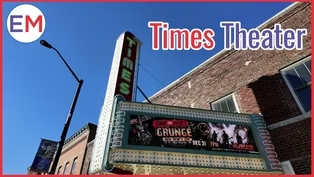
I am down in Rochester and I am out front of the Times Theater, which has recently, over the last few years, been renovated to bring new life back to it.
And it's serving a new purpose here in the community.
We're going to find out what all happened, to bring this back to life and be a functional spot and just kind of a way for the community to kind of stick together again.
Let's go in and meet Julie and find out all about it.
Hi, Julie.
Hello.
Welcome to the Times Theater.
So this is a really cool place.
We've actually had a chance to look around a little bit, but this theater has a really long history.
Can you tell me about it?
When did it originally open, and what has it been over the years?
It opened on Valentine's Day in 1924.
So just a time in the country, if you think about the Roaring 20s and all the celebrations and pre depression, the fashion, just the entertainment, vaudeville, silent movies, all of it.
And they were we had opera houses, we had theaters.
The we already had a small theater in town.
And the original owners of this are like watch out.
We're doing it.
They actually purchased an $8,000 organ.
And if you think about that, you could buy a house for that back then.
So everything was over the top, the marquee.
It just it put us on the map.
Chicago.
Notice like just a great history.
Big bands from Chicago.
Vaudeville shows, original tar sands from here.
Believe it or not, we have a long history of stars and talent all throughout.
So it's really cool that this sprung to life.
And big bands, big concerts, all kinds of things that were happening here.
And then over the years, the transition to other things like movie theater, things like that.
And then it went through a period of time where nothing was happening.
Exactly.
And so it took a group of people like you to decide that we needed to breathe life back into it.
Why did you guys make that decision, that this was something that you wanted to spend your time and resources on, and then what were your thoughts of what you're going to do with it?
How are you going to bring it back to life?
So we witnessed a lot of the history of this building.
70 kids, 80 the decline of the movie theater as it was.
You know, the equipment, all that.
And it was such a wonderful part of our life.
It was like, no, we're not we're not going to see this end like this.
And we dug in.
The pandemic was just about to hit, unbeknownst to us.
So right when we were digging, a group of about six of us got a lot more time on our hands, and we dove in and we didn't go with our memories.
We went even further back to the history.
You'll see.
You'll look around.
You'll see a lot of Gibson girls and Art Nouveau and tributes to Tarzan and every the big bands.
Once we get further in and just embraced our history and paid tribute to it.
so we're going to head into the theater and see some of the amazing stuff that's happened there.
So as we come into this space, it's really quite cool.
And what catches my attention is all of the paintings and murals along the walls.
Can you tell me how that got started?
And who's the artist that did this?
Okay, so I grew up in the antique business.
Our family has some of the most wonderful friends you can imagine.
When this project really started this level of work, I called a bunch of old friends and was like, you can help me a little.
You can help me a lot.
Like, help me, I need it.
And this started about two weeks later, James Francis Scott.
He started this at 81 years old.
He's.
This is the view from his spot on the lake.
And the lake is such an important part of our history here you'll see other murals with the big bands would come and stay at our resorts and all that.
And he's like, there you go.
And then about two weeks later, he's like, well, maybe we'll start.
And three and a half years later, he's not done.
He's not in there.
Come and enjoy him.
It's, he's actually our institute.
Chicago.
He's worked with Marshall Field's, he's collected the bears, remember the Super Bowl shuffle and all that era?
That team actually collected him.
He's known in Japan like he's a national treasure.
And it's so cool that he look at it.
He invested.
Yeah.
Look at all the colors.
And when you're here.
Be sure to check it out.
Especially if you're familiar with Rochester at all.
I hear there's a lot of Easter eggs everywhere in there, including somebody and their dog.
Well, maybe on the wall there in the front.
So that's really cool.
So let's head down, down to the stage and talk about some of the things that are still here that were original.
So behind us is the proceedings that you guys were able to save.
And part of that is due to when the movie theater was here.
They built a wall in front of it instead of carrying any of it down.
Right.
So, but, but that was a choice you had to make to preserve the history here.
And without hesitation, we were saving it.
and now it's home to new types of shows.
And so what kind of things are people coming to the theater for?
What kind of shows do you guys do?
And you're bringing the community together a whole new way?
Absolutely.
We're prepping today for a crowd of 400 people tomorrow.
Our mission is clear live music, movies and community events.
We we love tribute bands down here.
We love two hours with community where you know every word to every song.
Movies.
Wonderful.
We do senior to special needs classes, preschoolers.
We get them in here so they can fall in love with movies like we did I. So we've done talent shows.
We are open to anything that involves community and arts and culture.
It's driving our main street forward right now.
And and I'm very proud of our team and our employees understand there's so many volunteers here like it's many most of us worked without pay for the first two years to just make it happen.
We believe that much and just so happy we did it.
Because now the preschoolers that came, at first they're like, why?
I mean, one of them asked me why even worked here?
And I'm like, I like popcorn.
But now they're proud of it and it's it's for them.
And just to capture that experience, I we it it just makes the world better.
It really is such a great space.
And I'm thankful for all the people who have put in their time and effort and resources to make it happen, and we're just so thankful for all that work that you guys have done.
So, Julie, tell me about some of the shows that are coming up real soon.
Friday we have American Werewolf in London.
It's it's 45th anniversary.
We actually have a local expert on horror down here.
We have been developing, waiting for him to kick off this program, so we're looking forward to that.
We have a tribute to Metallica coming up, the Eagles.
A laser show that will blow your mind.
The Pink Floyd, echoes of Pompeii.
We will be playing elf.
We have a local church putting on a anniversary 30th anniversary Christmas choir.
Like, get on there.
Our schedule is packed.
Fall and winter are some of our busiest months because we're in the Midwest.
What else are you going to do?
Right.
So?
So remind you, remind us where people can get Facebook, Facebook, Facebook, but also the Times theater.com.
We keep that up quite often.
What's up there?
Well thank you so much for first of all, taking the effort to restore a beautiful place like this and then for sharing it with us.
We do appreciate it, and we hope you guys come out and experience the times right here in Rochester, Indiana.
It's a great place to visit, and it's just down the road from wherever you are.
I'm here in downtown South Bend, which, by the way, this is open.
We're on Colfax, just off the bridge, which is a bit of a mess right now.
Construction.
But I'm here with Jackie at Fire Arts.
And Jackie, tell me a little bit.
First of all, it is great that you're still open.
I'm sure this is very disruptive right now, so.
Well, it has been disruptive and we've thought that we've gotten fewer people in to see the studio and perhaps by Arc.
But, you know, we've sold a little bit and then we just tell them how to get here.
It is certainly a bit of a distraction right now that's going on.
But we made it here.
So I'm sure other people will too.
But it's not just art that's for sale right now.
I know there's a lot of classes that are going to be going on, so can you tell me a little bit about that?
Sure.
Yeah.
Well, we started out as a sculpture studio because several of us were sculptors taking sculpture from from Tuck Langland or ISB.
But since then we've we've gotten a lot of potters in here and jewelry makers and and so often I've been here I think three times to do segments for experience.
And I've never been in the back.
So I want to go back and see what it is that you actually do.
Because every time I've been out here, we've been showing works that have been on display.
So so we're going to head back and see what you do.
All right.
Yeah.
Yeah.
Okay.
So tell me about your class.
When does it start?
What is it that you're actually doing here?
Because I see lots of things, and I have no idea what I would do with them all, so.
Well, my first class is on November 21st, and I was asked to do one on the 28th.
Two.
We'll see what happens with that.
But, it's it's just for one day.
We open it at noon and close at five so students can have all that time to, to work on their piece.
Now they, they use copper pieces like this.
They have to clean them up nicely, and they have to make sure everything's clean.
Because if you have any grease on this, you're you're an enamel won't stick to it.
But we have various colors of, of the enamel powder.
And then we have what's called frit.
Now we have these elongated pieces that can help make your design as well as these little pieces of frit.
Now, sometimes you'll want something smaller than that.
So we can use a hammer to break that up.
But, You do.
Yeah.
We, we use a, we put the powdered enamel in here and then, and then put it on the piece, and we set our kiln at about 1500 degrees.
And we'll, we'll put the piece in there and it.
And what's the is the end goal, one of these pieces over here or is that like way advanced or.
Oh no that's that's what, that's the kind of thing that people will make in the class.
That's really pretty.
Yeah.
What's really nice about this is you can't really go wrong.
You know, you just kind of you just go for it, and whatever comes out will be beautiful, I'm sure.
So that's one of the classes that's going on.
I know there's others that's happening here, so we're going to chat more with some of the other artists as well about what they're going to be doing.
So thank you so much for showing.
Okay.
Well you're welcome.
So things are heating up now.
I'm here with Diane.
I like that you've safety glasses.
None for me though, so that's fine.
I'm replaceable.
Oh tell me a little bit about what we have here and what it is that you do.
Okay.
These are called lamp working beads.
And I'm making.
Glass beads around a mandrel, which is the stick.
Yep.
And we have coating on that.
Otherwise I won't be able to get the bead off.
Okay.
That makes sense.
And so when is your class taking place here.
It takes place on various Saturdays.
Okay.
When I get a few students together.
Yeah.
Then we come together and I set up this whole thing, and people weren't to heat the rod.
And melt it on the mandrel.
This is one of those things where I'm always curious, like with you.
How did you even, like, get into this?
How did you start doing it?
I did a couple class fuzing where we fuzed glass and made dishes.
And that's all it took.
When you like glass it is.
And so again your classes aren't really on set dates.
It's more just as people reach out and you've got a couple of people together that want to do it.
So if somebody is interested they can just reach out and say on it's they're listed on Saturdays, on Saturdays, and you can come from one to 1 to 4, 12 to 4.
And I hope by the end of the class it's basically learning to to maneuver the hot glass.
Yeah.
And by the end of the class, I would hope that you'd have enough beads to make a bracelet or a necklace.
I like it.
Well, thank you so much for showing me this.
They're all very pretty and very nice.
Oh, well, as much as I can appreciate beads, and now we're going to have a chat with some other people here that are doing classes as well.
So thanks again for showing us.
You're very welcome.
So I'm here with Griffin now.
Hey, how are you?
Hi.
Good.
How are you?
I'm good.
You.
First of all, you look cool.
So, you know, that's.
You got the look down.
Tell me about these miniatures.
It must be really nice to not have to use as much materials as some other art.
Yeah, but how did you get into this?
Well, I was actually doing much larger, larger scale sculptural installation before I visited Art Institute of Chicago.
Okay.
Like three years ago.
And on their basement level, there's a permanent installation called Sawn Room, and there's all miniature rooms that really inspired me.
The first time I met, it completely changed my mind.
So I went from very big to very small very quickly.
And so tell me about the class that you're doing here, because that's obviously the point of the segment today is talk to different instructors and different artists.
So, what about your class?
So my class I'm going to focus on miniature making specifically for furniture.
I also teach furniture design right now.
Saint Mary's College.
So that's interesting.
You know, parallel.
Yeah, a thing.
But, So you know, for furniture I would say like what working miniature what?
Working is a big part of it.
That is cardstock paper.
So that is also a big part of it painting if you want to do some of that.
And this is entirely out of foam.
So like foam carving if, if a woman would like to do it.
I would definitely encourage to do it, you know, some circuitry, you know, this is just kind of light up.
It has a bulb in it, but it's too bright, so I won't turn it on.
You can turn it on.
That's okay.
And have a battery with me.
That's the real reason.
Not because it's too bright.
Okay, that's the artisan you're trying to make.
No.
Yeah.
And just to finish this up, when is your class taking place?
It's November 14th.
Okay.
To December, six weeks.
Okay.
And it's 1 to 4 p.m.
on Saturday.
Awesome.
Thank you so much for showing us this.
Thank you very much.
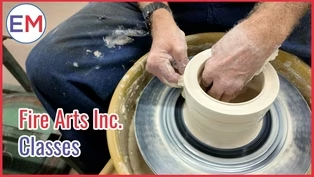
Now, when it comes to pottery, that's one that we featured on the show before.
And it's must be very popular.
Is it Lynn?
Yes it is.
It's getting your hands in there, the feel of it.
And it's from ages five to well into your 80s.
People seem to dig this class.
You make it look so simple.
But have you been doing it a long time?
I learned I had a fantastic college professor, but learned primarily through trial and error.
Since the mid 1980s, forward Nice.
The pottery class is on Monday night from 630 to 830, and it's geared specifically for beginners.
Or if you've never thrown on the wheel, this class is geared for you and the focus is on helping people that have never done this before.
Or maybe they did it in high school.
They had like where I went to high school in Northeast Ohio, one kick wheel, and you had about two minutes worth of practice and four years of taking art classes every semester.
All four years.
And or you just like throwing pots and you need studio space to work.
And this is like a little refresher course for those folks.
Well, thank you so much for showing us this and hopefully lots of people sign up for your next session.
So thanks for sharing it.
Thank you you guys have a good day.
You too.
So yeah, there's so much going on here at Fire Arts in downtown South Bend.
Don't let the construction on the bridge stop you.
Now usually on Experience Michiana, we're out and about experiencing Michiana, but today we invited Janet here to PBS to w it here in downtown South Bend.
Janice, welcome.
Thank you.
Yeah.
Thank you so much for being here.
You're originally from upstate New York.
I am.
You lived in Chicago, and then you moved to this area.
But you moved here for the symphony.
So can you tell me a little bit about your journey before we talk about what people can experience on this week's show?
So I'm curious to learn about you.
Thank you.
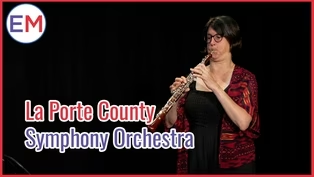
I have been a professional musician all my life.
Ever since I was ten years old, I've been playing this instrument, the oboe.
And after I graduated from the Eastman School of Music in Rochester, New York, we, my husband and I moved to Chicago, where we worked with the Civic Orchestra of Chicago, began to take auditions, began to freelance.
We were working and at a certain point when I won the principal of a job here in South Bend, we were living in Rogers Park, which we, you know, is the far north side of Chicago.
And all I ever did was fight my way through Chicago traffic to come to Indiana to do some real driving and play.
So we moved here.
It was a community that felt like a person could live here.
Yeah, no.
As someone who's not originally from here, it has a certain charm to it that I think a lot of people questioned sometimes, but I'm like, the 12 minute commutes everywhere is definitely helpful to you.
And you know, all the drivers are not trying to kill you like in Chicago, which is great too.
And so tell me about your instrument and the oboe.
Tell me about that.
And tell me about, like, how you picked it up originally.
And, you know, you started when you were ten.
Was that the instrument you started with?
It is.
I had always assumed that I was going to play the flute when I was eight years old and nine years old.
I couldn't wait to choose the flute, and we went to the school.
The day that we were to choose our band instruments and the eighth grade band came around, played their instruments for us, and I heard the oboe for the first time and thought, oh, obviously.
Obviously that is what I need to play.
And it's such a self-selecting instrument.
Like it's a weird sound.
It's to play.
It's difficult, like the people who play the oboe and like, persevere with the oboe are a special breed of people.
They like to suffer.
They kind of.
Yeah, yeah.
For a beautiful outcome.
Yes, exactly.
I like it.
That's kind of life, isn't it?
So in a way.
So I know you're a part of the South Bend Symphony, but also you're going to be performing with the Laporte County Symphony, which is what we're here to talk about.
So tell me about their show that's coming up and how you got involved.
And is there a lot of connection between the two, or do often do performers like play with both or.
I mean, I believe there are a few musicians who move back and forth, but the Laporte County Symphony is more of a community orchestra, so more people are local to that community.
More people are coming in for the joy of playing.
And I met the conductor when she came here a few years back to conduct The Nutcracker.
I believe she did some children's concerts with us, and we spoke at that time, and I pitched her some solo oboe work, because one of the things that I love the most to do is to get to stand in front of the orchestra, you know, where the sparkly dress, be at the front of the stage in the lights and solo on my instrument.
It's such a joy for me.
And not everyone.
Not everyone likes that in the same way.
Yeah.
So a few years later, it came to this concert where I was invited to solo on a few works.
The orchestra's also going to be playing, which we all know as like the most gorgeous orchestral music, so enjoyable to listen to, storytelling and and magic.
And the theme of it is Arabian Nights because of that.
And so when is that concert going to be taking place?
The concert is November 7th at 7:00 in the evening.
It's at the Laporte Civic Auditorium.
Okay.
I believe that's all.
You're like, I'll put it into my phone and you'll get there.
Exactly.
Yeah.
And again, how long have you been in this area?
Playing with the South Bend Symphony.
And again, not to confuse anyone watching, but this is to promote the Laporte County Symphony's Arabian Nights on November 7th, as you mentioned.
But how long have you actually been in this area performing?
I moved here in 2007, tell me a little bit about the piece you're going to play or.
Absolutely.
I'm going to be performing a piece by Madame Leszczynski.
We don't know anything about her other than her last name.
Like we don't even know.
Is that her maiden name?
Is that her married name?
I don't know.
The piece was sort of resurrected from archival material only a few years ago.
By it was Catherine Needleman, who was the principal oboist in the Baltimore Symphony, who sort of rediscovered and put in the work to resurrect this piece.
But the piece is clearly from the Baroque era, from like, the 1700s.
Okay.
And so it is the oldest oboe concerto that we know of, written by a woman.
Okay.
And it is shrouded in mystery.
We're not even sure what country she's from.
It's a very neat experience to be playing, you know, as a relatively new work in our repertoire.
Yeah.
Something that is that old, that is, and something that has historical significance, almost feels like discovering treasure or something in a way.
And it is cool that with music that even though it was lost for so long and then came back that it like never dies, you know, as long as you keep playing it.
Exactly.
I like that.
Exactly.
It stands up as a piece of music.
Yeah.
All right.
I'm excited to hear it.
Yeah.
Awesome.
Well, thank you so much for playing that.
And.
And what's it like preparing for a concert like this in for an event like this?
I mean, are you traveling back and forth to the port, or do you kind of all just get your your song list and all practice separately?
Or how does all that work?
What a great question.
No, actually I have not met the orchestra yet.
I have not showed up, you know, in front of the stage with them.
I won't do that until the night before the performance.
Okay.
But when you show up as the concerto soloist, of course, it is your job to know the piece in advance and to be ready for that sort of hero role of being in front of the group.
So, of course, I have been practicing it in my house.
Of course, I hired a pianist locally, and we've been working on it together so that I have the feeling of what it is to go through it and what the harmonic motion is doing and what the entrance is all sound like.
Yeah, I've been working on it.
I mean, I've sort of known that this was going to happen for six months or so.
Yeah.
So you're so I'm, I'm, I'm thinking about you're ready.
I'm ready.
You're ready.
No, I love that.
And I love how enthusiastic you are about it.
It's like, you know, I feel like you still have that ten year old energy.
I love what I get to do.
Yeah, it's it's awesome.
And I mean that respectfully, you know, because I think we're supposed to be more childlike, you know, who wants to be an adult, you know, but it's great that you're so excited about that.
And so are you performing out front then the whole night, like, is the whole concert based around you or is there different, you know, will other musicians be also taking front of the stage as well, or are you the star of the show?
I believe I'm the star of that's that's okay.
I mean, the the orchestra will open with an overture, the Mozart abduction of the overture, which is great and has like Turkish flavors to it.
And then I'll come out, I'll play the concerto, the Madame Little Concerto, and then after that, I'll be playing Gabriel's oboe.
So we're sort of like an encore, but it's still accompanied by the orchestra.
And if you're familiar or if your listeners are familiar with Gabriel's Oboe, it's the theme music from the movie The Mission, the 1986 film.
Okay.
And if you know no other oboe solos, probably recognize Gabriel's oboe.
Okay.
It's so lovely.
It's a melody that people can leave the auditorium humming.
Nice.
It's a beautiful piece.
My assumption is that after that, there'll be an intermission, and then they'll close with nice.
And I think it would be great for people to go to Laporte on November 7th, watch you perform, and then obviously hopefully support you wherever you're performing.
So thank you so much for for sharing that with us.
Thank you so much.
Well, that's it for this week's show.
Thank you so much for being with us.
Remember, if you have ideas of things we should get out and experience, let us know about them on Facebook.
Have a great weekend everybody.
This WNIT local production has been made possible in part by viewers like you.
Thank you.
 New
Video has Closed Captions
Clip: S2026 Ep44 | 13m 32s | No description (13m 32s)
 New
La Porte County Symphony Orchestra
Video has Closed Captions
Clip: S2026 Ep44 | 12m 23s | No description (12m 23s)
Providing Support for PBS.org
Learn Moreabout PBS online sponsorship New Episode
- News and Public Affairs

Top journalists deliver compelling original analysis of the hour's headlines.
 New Episode
- Drama

Hugh Bonneville stars in a crime drama inspired by one of the largest robberies in British history.

 New Episode
 New Episode
 New Episode


Support for PBS provided by:
Experience Michiana is a local public television program presented by PBS Michiana